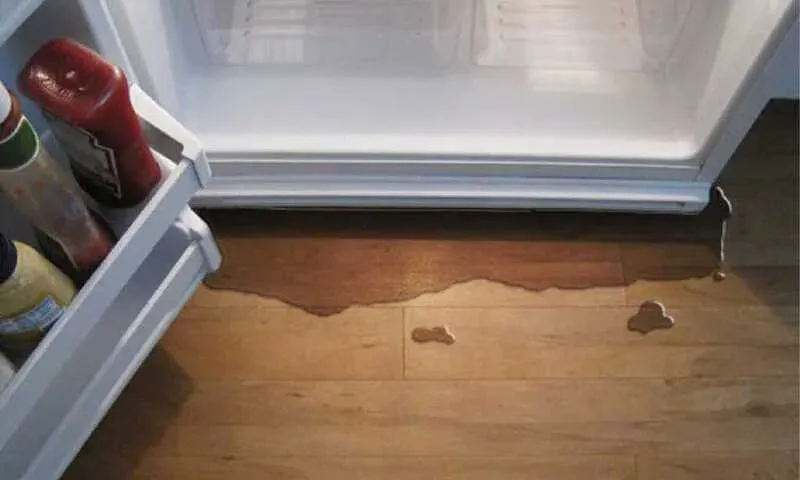
A puddle in front of the refrigerator is never a nice surprise, especially when it has already crept under the cabinets or into the grout. The good news is that most refrigerator leaks come from a small number of causes, and several of them take only a few minutes to fix yourself.
This guide walks through the 8 most common reasons a refrigerator leaks water, how to tell which one you are dealing with, and when it makes more sense to call for refrigerator repair in Groveland.
Quick answer: Most refrigerator leaks come from a clogged defrost drain, a cracked drain pan, a loose or damaged water supply line, or a refrigerator that is not level. If your fridge has an ice maker or water dispenser, the water inlet valve, filter and ice maker fill tube are the next places to check.
First, Find Where the Water Is Coming From
Where the water shows up tells you a lot about what caused it. Dry the area completely, then check back in an hour or two to see where it returns first.
| Where you see water | Most likely cause |
|---|---|
| Inside the fridge, under the crisper drawers | Clogged defrost drain |
| On the floor at the front of the fridge | Drain pan problem or the fridge is not level |
| On the floor behind or beside the fridge | Water supply line or water inlet valve |
| Around the water dispenser | Water filter or dispenser problem |
| Ice or water on the freezer floor | Clogged defrost drain or ice maker fill tube |
| Water on the shelves or door bins | Worn door gaskets letting in humid air |
Before You Start: 3 Quick Safety Steps
- Unplug the refrigerator or switch off its breaker before you pull it out or reach behind it. Water and electricity do not mix.
- Turn off the water supply if your fridge has an ice maker or dispenser. The shut-off valve is usually under the kitchen sink or on the wall behind the fridge.
- Protect your floor. Lay down towels and wipe up standing water quickly. Hardwood, laminate and the subfloor underneath can be damaged by a slow leak long before you see it.
8 Common Causes of a Refrigerator Leaking Water
1. Clogged Defrost Drain
Signs: Water pooling under the crisper drawers, ice forming on the freezer floor, or water dripping from the back wall inside the fridge.
Why it happens: Several times a day, your refrigerator runs a defrost cycle that melts frost off the evaporator coils. That water runs through a small drain hole, down a drain tube and into a pan under the fridge. Food crumbs, debris or ice can block the drain, so the water backs up inside the cabinet instead. In Central Florida, every door opening lets warm, humid air inside, which means more frost and more water flowing through that drain than in a drier climate.
What you can do: Find the drain hole, usually on the back wall of the fridge or freezer near the bottom. Use a turkey baster to flush it with warm water until it drains freely, or gently clear it with a pipe cleaner. Some models also have a small rubber valve at the bottom of the drain tube, behind the fridge, that can clog and needs rinsing.
Call a technician if: The drain keeps freezing up again within a few days. That usually points to a failing defrost heater, defrost thermostat or control board, which needs proper testing.
2. Cracked or Overflowing Drain Pan
Signs: Water on the floor at the front or underneath the refrigerator, often with no water inside the fridge itself.
Why it happens: The drain pan sits under the fridge and catches defrost water. Normally, heat from the compressor and air from the condenser fan evaporate that water before it builds up. If the pan is cracked, has shifted out of place, or the condenser fan is not running, the water ends up on your floor.
What you can do: Remove the toe grille at the bottom front of the fridge, or pull the fridge out and look from the back. Check whether the pan is cracked or sitting at an angle. A cracked pan can be replaced with the correct part for your model number.
Call a technician if: The pan is fine but keeps overflowing. A condenser fan that has stopped turning is a common cause, and it also makes the fridge work harder to stay cold.
3. Leaking Water Supply Line
Signs: Water on the floor behind or beside the fridge, and sometimes a wet spot on the wall or inside the cabinet next to it.
Why it happens: If your refrigerator has an ice maker or dispenser, it is connected to your home’s water through a thin supply line. Plastic lines get brittle with age, lines get kinked when the fridge is pushed back against the wall, and compression fittings can work loose over time.
What you can do: With the water turned off, pull the fridge out carefully and run a dry paper towel along the line and each fitting to find the wet spot. A loose fitting can sometimes be snugged up by hand or with a wrench. If you find a crack or a kink, replace the whole line rather than patching it.
Call a technician if: The leak is at the connection to the fridge itself, or you are not sure which line or fitting fits your model.
4. Faulty Water Inlet Valve
Signs: Water near the bottom back of the fridge, an ice maker that overfills, or a dispenser that keeps dripping after you let go of the lever.
Why it happens: The water inlet valve opens and closes to send water to the ice maker and dispenser. Over time, the valve can crack or stop closing completely. Central Florida’s hard water does not help: minerals build up inside the valve and keep it from sealing.
What you can do: Look at the valve at the lower back of the fridge for cracks or drips while the water is on. That is about as far as a homeowner should go.
Call a technician if: The valve is leaking or not shutting off. It connects to both the water supply and the fridge’s electrical system, so replacement is a job for a technician.
5. Water Filter Problems
Signs: Water dripping around the filter housing or dispenser, often right after a filter change.
Why it happens: A filter that is not fully locked in place, a filter that does not match your model, or a cracked filter housing can all let water escape. Sputtering from the dispenser after a new filter is normal for a short while, as trapped air works its way out of the line.
What you can do: Remove the filter and reinstall it until it clicks or locks fully. Check that the filter is the correct one for your model, and that the O-rings are in place. Most manufacturers recommend replacing the filter about every 6 months, and sooner with hard water.
Call a technician if: The filter housing itself is cracked or the leak continues with a new, correctly fitted filter.
6. Refrigerator Is Not Level
Signs: Water collecting at the front of the fridge or on the floor, and doors that do not close on their own.
Why it happens: Refrigerators are designed to sit slightly higher at the front than at the back. That small tilt helps the doors swing closed and lets defrost water run back toward the drain. If the fridge leans forward, water can spill out of the drain path instead.
What you can do: Put a bubble level on top of the fridge, front to back and side to side. Adjust the leveling legs or rollers at the bottom front until the fridge sits level side to side and slightly higher at the front.
Call a technician if: The fridge still leaks after leveling, which means one of the other causes on this list is likely involved.
7. Worn Door Gaskets
Signs: Water droplets on the shelves or door bins, frost building up quickly, or a fridge that seems to run all the time.
Why it happens: The rubber gaskets around each door keep cold air in and humid air out. When they crack, harden or pull away, warm, moist air gets inside. In a humid Florida kitchen, that moisture turns into condensation and extra frost, which then melts into more water than the drain can handle.
What you can do: Try the dollar bill test. Close the door on a bill and pull it out. If it slides out with no resistance, the seal is not tight at that spot. Clean the gaskets with warm, soapy water, since sticky residue can keep them from sealing.
Call a technician if: The gaskets are torn, flattened or pulling away. A new gasket needs to match your exact model.
8. Ice Maker or Dispenser Issues
Signs: Water or ice on the freezer floor, ice cubes frozen together in the bin, or water dripping from the dispenser area.
Why it happens: If the ice maker’s fill tube freezes, the incoming water has nowhere to go and spills into the freezer. Low water pressure, a partly closed shut-off valve or a faulty inlet valve can all cause a slow trickle that freezes in the tube. Dispensers can also drip when their internal parts wear out.
What you can do: Check that the household water valve is fully open. If the fill tube is frozen, turning off the ice maker and letting the tube thaw can get things moving again. Empty and clean the dispenser drip tray.
Call a technician if: The fill tube keeps freezing, the ice maker overfills, or the dispenser leaks from inside the door.
Why Refrigerators Leak More Often in Central Florida
A few things about life in Groveland and the rest of South Lake County put extra strain on refrigerators:
- Humidity and heat. Every time the door opens, warm, moist air comes in. That means more frost on the coils, more water during each defrost cycle and more chances for a drain to back up.
- Hard water. Minerals in Central Florida water build up in inlet valves, filters and ice maker lines, which can lead to drips and overfilling.
- Garage refrigerators. Second fridges in the garage deal with much higher temperatures, and garage floors are often sloped toward the door, so the fridge can lean forward without anyone noticing.
- Power outages. During storms and hurricane season, a long outage lets frost and ice melt all at once. The drain often cannot keep up, and any water left in the drain can refreeze once the power comes back.
What You Can Fix Yourself vs. When to Call a Technician
Usually safe to try yourself:
- Flushing a clogged defrost drain with warm water
- Leveling the refrigerator
- Reseating or replacing the water filter
- Cleaning door gaskets and the dispenser drip tray
- Tightening a loose supply line fitting
Best left to a technician:
- A defrost drain that keeps freezing again
- Replacing the water inlet valve
- A condenser fan, defrost heater or control board problem
- Leaks from inside the door or behind interior panels
- Any leak you cannot trace to its source
If the water keeps coming back after you have checked the easy fixes, a local refrigerator technician can track down the cause before it damages your floors or cabinets.
How Much Does It Cost to Fix a Leaking Refrigerator?
At Ramson Appliances, the diagnostic visit is $79, and we waive it when you approve the repair. Most refrigerator repairs fall between $200 and $450 including parts and labor, depending on which part failed and your model. Simple fixes like clearing a drain or replacing a supply line usually cost less than repairs that need a new valve, fan or control board.
Either way, you get the price in writing before any work starts, so there are no surprises.
Should You Repair or Replace a Leaking Refrigerator?
Most leaks are caused by low-cost parts, so repair is usually the better choice. Replacement starts to make sense when:
- The refrigerator is more than 10 to 15 years old
- The repair would cost more than half the price of a comparable new fridge
- There is also a sealed system problem, such as a failed compressor or refrigerant leak
If you are not sure, ask your technician for an honest opinion before you approve the repair.
How to Prevent Refrigerator Leaks
- Flush the defrost drain with warm water a couple of times a year
- Replace the water filter about every 6 months
- Clean the door gaskets and check them with the dollar bill test
- Check that the fridge is level after cleaning behind it or moving it
- Leave a few inches of space behind the fridge so the supply line does not kink
- Look at the supply line and its fittings once a year for cracks or drips
Refrigerator Still Leaking? Call Ramson Appliances
If you have checked the easy fixes and your refrigerator is still leaking, we can help. Ramson Appliances provides refrigerator repair for homes in Groveland, Clermont, Minneola, Mascotte and across South Lake County. Same-day appointments are often available.
Call (352) 364-9927 to book a visit.