

Whirlpool Appliance Specialists
Whirlpool Appliance Repair in Groveland, FL
Your Whirlpool is probably one of the hardest-working machines in your home. When it starts slipping, we track down what changed, explain it in plain terms and give you a written quote before any repair begins.
What We Cover
When Your Whirlpool Appliance Starts Falling Behind
Whirlpool makes a wide range of appliances, from basic top-load washers to refrigerators with dispensers, ice makers and electronic controls. The newest and oldest models in a Groveland neighborhood can be decades apart in design.
Because of that range, the same complaint can have very different causes. A warm refrigerator might be an airflow issue in one unit and a defrost problem in another. We look at your specific model before recommending anything.
These are five early signs that an appliance is starting to struggle.
Food Isn't Staying at the Right Temperature
Milk turns sooner than it should, or the freezer drawer feels more cool than cold. A thermometer on the middle shelf gives you a quick reality check.
Laundry Isn't Finishing Properly
Clothes come out soaked, soapy or wrinkled from sitting in a machine that paused and never picked back up.
Dishes Aren't Coming Out Clean
Glasses come out cloudy, food is baked onto plates, or there's a pool of water left at the bottom of the tub.
Cooking Temperatures Have Become Unreliable
Recipes need more time than they used to, or one side of the pan browns while the other doesn't.
Everyday Appliance Noises Have Changed
You know how your appliances normally sound. A new hum, knock or squeal is often the first sign that something is wearing out.
Know What a Whirlpool Repair Costs Before We Start
Our diagnostic visit is $79, and we waive it when you approve the repair. You get the price in writing first, so nothing on the invoice is a surprise.
Pick Your Appliance
Whirlpool Appliances We Repair
Whirlpool Refrigerator Repair
Top-freezer, bottom-freezer, side-by-side and French door models.
Whirlpool Washer Repair
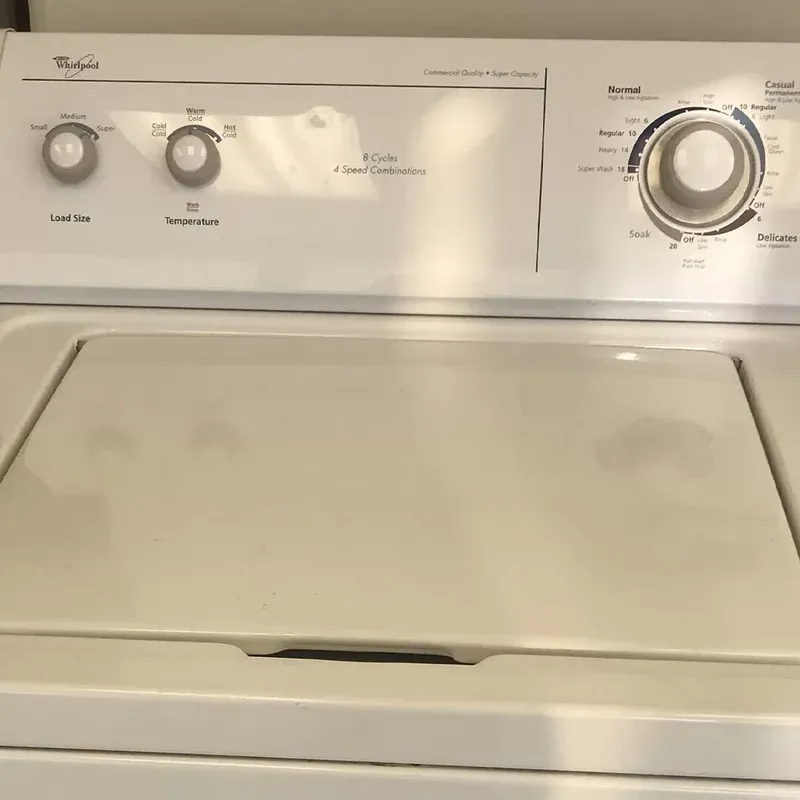
Top-load and front-load washers with fill, drain, spin or lid lock trouble.
Whirlpool Dryer Repair
Gas and electric dryers that run cool, stop early or make new noises.
Whirlpool Dishwasher Repair
Built-in units with drainage, cleaning or door latch problems.
Whirlpool Oven Repair
Single and double wall ovens, and the ovens built into ranges.
Whirlpool Stove & Range Repair
Coil, smooth-top and gas ranges with burners that won’t heat or light.
Whirlpool Freezer Repair
Upright and chest freezers, including garage units that fight the summer heat.
Whirlpool Microwave Repair
Over-the-range microwaves that don’t heat, won’t start or have a dead vent fan.
Early Warnings
Small Symptoms Can Point to a Bigger Whirlpool Appliance Problem
Most breakdowns start as small changes. When you catch them early, the repair is usually simpler and the appliance has less time to wear on other parts.
Call (352) 562-0907Appliance Takes Longer Than Usual to Work
Longer dry times, a slow cooldown after grocery day or an oven that takes forever to preheat all suggest a part is falling behind.
Cycles Stop Before Completion
An appliance that stops partway through a cycle is often reacting to a safety check or sensor reading it doesn’t like.
Water Isn't Filling or Draining Correctly
Slow fills, standing water and gurgling drains usually trace back to a valve, pump, hose or blockage somewhere in the water path.
Heating or Cooling Keeps Changing
Temperatures that jump around from day to day tend to point to a control or sensor issue, not a part that has failed outright.
New Rattling, Grinding or Buzzing Sounds Appear
Moving parts wear gradually. Catching the noise early can protect the motor or bearing it connects to.
Controls Become Slow or Unresponsive
Buttons that need an extra press or a display that lags can come from a worn keypad, loose connection or control board.
The Same Warning or Error Keeps Returning
A code that keeps coming back after a reset means the appliance is still finding the same problem.
Symptoms We See
Whirlpool Refrigerator Repair for Cooling Problems
A refrigerator depends on three things working together: cooling, airflow and defrost. When one of them slips, the symptom often shows up in a different compartment.
Refrigerator Isn't Cold Enough
Dusty condenser coils, a slow fan or a blocked air passage can all keep cold air from reaching the fresh food side. Testing tells us which one it is.
Freezer Is Too Warm
If ice cream is soft, we check whether the evaporator is iced over, whether the fan is running and whether the compressor is cycling normally.
Food Is Freezing in the Refrigerator Section
Frozen lettuce often means a damper stuck open, a sensor reading too warm or a setting that has been changed without anyone noticing.
Ice Maker Has Stopped Working
The problem could be the water supply, the inlet valve, a frozen fill tube or the ice maker itself. We work through them in order.
Water Dispenser Isn't Working
An old filter, a line that has frozen in the door or a valve that no longer opens fully can all slow or stop the flow.
Water Is Pooling Around the Refrigerator
A clogged defrost drain, a cracked drain pan or a loose supply line. Finding the source keeps water away from your cabinets and floor.
Frost Keeps Building Up
Frost usually means warm, humid air is getting in through a door seal, or the defrost cycle isn’t running as it should.
Refrigerator Runs for Long Periods
Long run times are normal on a hot Florida afternoon. Nonstop running for days is not, and it’s worth checking before the compressor wears out.
If food is at risk, move the most perishable items to a cooler and keep the doors closed as much as possible. Then give us a call with your model number.
Schedule Refrigerator RepairSymptoms We See
Whirlpool Washer Problems That Can Hold Up Laundry Day
Top-load and front-load Whirlpool washers go through the same basic steps: lock, fill, agitate, drain and spin. The step where it stops tells us where to start looking.
Washer Won't Start
We check whether power reaches the controls, whether the lid or door switch is registering and whether the control board is sending the start signal.
Washer Doesn't Fill Correctly
Supply valves that are partly closed, kinked hoses and clogged inlet screens are common. After that, we look at the inlet valve and water level sensing.
Washer Won't Drain
Small items like socks and coins can block the drain path. We clear it, then test the pump so the problem doesn’t come back.
Washer Won't Spin
Most washers won’t spin until they’ve drained and locked. We check those first, then the drive system.
Cycle Stops Before Finishing
Mid-cycle stops can come from a lock that loses contact, an unbalanced load or a sensor giving an unexpected reading.
Washer Is Shaking or Moving
Uneven floors, unbalanced loads and worn suspension parts all cause movement. We level the machine and check the suspension before it gets worse.
Water Is Leaking
Where the water appears gives us a clue. Front leaks often mean a seal or door boot. Back leaks usually mean a hose or connection. Underneath often means the pump or tub.
Lid or Door Won't Lock
The washer won’t run until the lock is confirmed. A worn latch, a damaged strike or a wiring problem can stop that signal.
Please don’t try to open or force a locked washer door while there’s water inside. Let the cycle end or turn off power, then call us.
Symptoms We See
Whirlpool Dryer Not Drying Like It Used To?
A dryer needs heat, airflow and tumbling to work well. Airflow is the one most people forget, and it affects drying time as much as the heating system does.
Dryer Runs With Little or No Heat
Electric dryers heat with an element. Gas models use an igniter and valve. Both rely on safety devices that shut off heat when airflow is poor.
Clothes Need More Than One Cycle
A long vent run, a crushed hose behind the dryer or lint buildup in the duct can double the drying time without any failed part.
Drum Isn't Turning
If the motor runs but the drum doesn’t move, the belt or idler is the usual suspect. If nothing runs at all, we check the motor and the circuits that power it.
Dryer Stops Unexpectedly
A dryer that shuts off early may be overheating and tripping a safety limit. We look for the cause instead of just resetting it.
Dryer Gets Too Hot
If the cabinet feels hot or you smell scorching, stop using the dryer. Restricted airflow or a faulty temperature control needs attention before the next load.
Squeaking or Thumping Sounds Have Started
Squeaks often come from worn rollers or glides. A thump can mean a flat spot on a roller or something caught in the drum.
Dryer Won't Power On
We check the door switch, thermal fuse, start switch and the power supply at the outlet, staying safely away from live wiring.
Have the vent run checked at least once a year. Even with a new part, a restricted vent will keep slowing the dryer down.
Request Dryer ServiceSymptoms We See
Whirlpool Dishwasher Problems That Leave More Work Behind
When the dishwasher stops doing its job, you end up doing it by hand. These problems are usually tied to water supply, drainage or spray pressure.
Water left in the tub
We work from the filter to the drain hose, the air gap or disposal connection, and finally the pump.
Spotty or gritty dishes
Clogged spray arms, a dirty filter, low water temperature or hard-water buildup can all reduce cleaning power.
Door won't latch
A bent strike, worn latch or a rack that sticks out slightly can keep the door from sealing. The dishwasher won’t start until it does.
Leaks near the door
Worn gaskets, the wrong detergent or a unit that isn’t level can all push water out the front.
Won't start or stops early
A power issue, door switch or control fault could be to blame. We test step by step to find the source.
Symptoms We See
Whirlpool Oven & Range Problems That Disrupt Mealtime
Whether you cook on gas, coil or smooth-top, a heating problem can throw off dinner. These are the complaints we usually hear.
For a gas range, please don’t try to adjust or take apart the burners or valves yourself. Let a technician handle anything that involves the gas supply.
Oven not heating
Depending on the model, we check the bake element, igniter, temperature sensor and control system.
Temperature drift
We compare the oven’s actual temperature with our own meter before adjusting anything.
Surface burner problems
A single burner out often points to that burner’s own parts. Several burners out at once points to the shared controls.
Gas smell or ignition trouble
If you smell gas, leave your home and call your gas provider before calling us.
Unresponsive controls
A worn keypad, loose ribbon cable or control board can stop the panel from responding.
Worth Knowing
Water, Heat and Airflow: Three Systems Worth Watching
Almost every problem on this page comes down to one of three systems. Knowing which one is involved helps you describe the issue clearly when you call and helps us find it faster.
Water
Washers, dishwashers and refrigerator dispensers all depend on water coming in and going out. Valves, hoses, pumps and screens control that flow. Groveland’s hard water can slowly build up in each of them.
Heat
Ovens, dryers and dishwashers depend on heating parts and the sensors that control them. A heater can work fine while a sensor gives the wrong reading, so we test both.
Airflow
Refrigerators, freezers and dryers all need moving air. A dusty coil, a slow fan or a crushed vent can look like a major failure.
Reading The Display
Whirlpool Error Codes Can Help Narrow Down the Problem
Many Whirlpool appliances show a code when they detect a problem. The code is a good starting point, but it isn’t a diagnosis.
Meanings change between models
- The same code on two different Whirlpool appliances, or even two model years, can mean different things. We check it against your exact model number.
A code narrows the search
- It usually points to a system, like filling, draining, heating or door locking. We still test to find the part that’s actually causing it.
One reset is fine
- If a code shows up after a power outage, one reset may clear it. If it comes back, stop resetting and schedule a visit.
Write it down before it disappears
- Some codes only show up briefly. A quick photo of the display gives us something useful to start with.
What Usually Fails
Parts We May Check During Whirlpool Appliance Diagnosis
We don’t assume a part has failed based on the symptom alone. Depending on the appliance, these are the components we may test during a visit.
Sensors and thermistors
They report temperature and water level to the control. A reading that’s slightly off can affect the entire cycle.
Pumps
Drain pumps in washers and dishwashers, plus circulation pumps that move wash water through the spray arms.
Heating elements and igniters
They provide heat for ovens, electric dryers, gas dryers and some dishwashers.
Motors
They turn the drum, run the agitator or power a fan. We check how they start and how they sound while running.
Fans
Condenser and evaporator fans keep a refrigerator cool. Convection fans help an oven cook evenly.
Water inlet valves
They open and close to let water in. A sticky or weak valve can cause slow fills or overfilling.
Door seals and latches
Seals keep cold air in or water from leaking out. Latches let the appliance know it’s safe to run.
Electronic control boards
We test them last, after confirming the inputs and outputs are working correctly.
A Few Minutes Now
A Few Details Can Make Diagnosis Easier
You don’t need tools for any of this. A few minutes of notes can save time during the visit.
Model and serial number
Find the label inside the door, under the lid or along the frame. A photo is perfect.
Any code or flashing light
Write down exactly what you see, including the order of the letters and numbers.
When it started
Let us know whether it started suddenly or gradually, and whether it happened after a storm, move or power outage.
What still works
Tell us which features still work, like the lights, fan or display. That helps us narrow down the problem.
A clear path to the appliance
Clear enough room for a technician to reach the back or sides if needed.
Start To Finish
How We Move From Symptoms to a Repair
Every visit follows the same steps, whether it’s a noisy dryer or a warm refrigerator.
- 1
Listen
You tell us the symptom and the model. We ask questions to narrow it down.
- 2
Inspect
We look for obvious signs first, like leaks, kinks, blockages or burn marks.
- 3
Test
We use a meter to check the parts involved and confirm the actual cause.
- 4
Quote
We give you a written price before any work begins.
- 5
Repair and Verify
We make the repair and run the appliance to confirm it works properly.
Honest Advice
Is Repair Still the Right Move for Your Whirlpool Appliance?
There’s no rule that works for every appliance. Here are the questions we go through with you.
- 01
How old is it?
A newer appliance with one failed part is usually a strong candidate for repair. As it gets older, the decision gets closer.
- 02
How has it held up?
An appliance that has rarely needed service is different from one that has broken down several times recently.
- 03
What would replacement cost?
Compare the repair quote to the full cost of a similar new appliance, including delivery and installation.
- 04
Are the parts still available?
Most Whirlpool parts are easy to find. If yours has been discontinued, we’ll tell you before you commit to a repair.
- 05
What else is wearing out?
If we notice rust, a damaged tub or failing seals during the visit, we’ll let you know so you can make an informed decision.
Fewer Call-Outs
Everyday Care That Can Help Your Whirlpool Appliances
These habits are safe for any homeowner and don’t require removing panels.
Vacuum refrigerator coils
Unplug the refrigerator first, then vacuum the coils once or twice a year. Dusty coils make it work harder in Florida heat.
Swap the water filter on schedule
An overdue filter slows the dispenser and ice maker, and it puts extra strain on the water valve.
Use HE detergent in HE washers
Too much or the wrong detergent can leave residue, cause odors and trigger drainage problems.
Empty the lint screen every load
It only takes a few seconds and helps improve airflow and drying time.
Rinse the dishwasher filter
Check your owner’s manual to see where the filter is and how often to clean it. Many models need a monthly rinse.
Wipe door seals
Clean refrigerator gaskets and washer door boots to prevent buildup and help them seal properly.
Who We Help
Whirlpool Appliance Repair for Groveland Homes & Properties
Whirlpool appliances are common across Groveland, from starter homes to rentals and shared laundry rooms.
Family homes
Your kitchen and laundry appliances get daily use. We schedule around your routine.
Condos and townhomes
For stacked laundry and tight spaces, we plan access ahead of time.
Rental homes
We can meet your tenant on site and send you a clear summary afterward.
Property managers
For multiple units at different addresses, we group visits when locations allow.
Small businesses
For break room refrigerators and shared washers, we schedule visits around your business hours.
Where We Work
Whirlpool Appliance Repair Near Groveland
Groveland is home base, but our team also handles Whirlpool repairs throughout the area. You can learn more about our appliance repair service in Clermont, how we help homeowners in the Minneola service area, or find nearby appliance service in Mascotte.
Answers Before You Book
Whirlpool Appliance Repair Questions From Groveland Homeowners
Have another question? Call (352) 562-0907 and tell us what is going on with your appliance.
Why is my Whirlpool refrigerator running but not cooling?
Common causes include dusty condenser coils, a fan that isn’t moving air or frost blocking the evaporator. We test each one before recommending a repair.
My Whirlpool washer has water left in it. What should I check?
Make sure the drain hose isn’t kinked or pushed too far into the standpipe. If that looks fine, turn off the washer and give us a call. Don’t take the washer apart.
Why won’t my Whirlpool washer spin?
Most washers won’t spin until the water drains and the lid or door locks. A spin problem can start with drainage, the lock or the drive system, so we test in that order.
My Whirlpool dryer runs but there’s no heat. Is it worth repairing?
Usually, yes. Heating problems often come from one part or from poor airflow. We also check the vent, so the same problem doesn’t come back.
Why isn’t my Whirlpool dishwasher draining?
Common causes are a clogged filter, a blocked drain hose or air gap, or a disposal connection that needs clearing. If those are clear, we test the pump.
My Whirlpool oven isn’t heating. What could be wrong?
On an electric oven, it could be the element, sensor or controls. On a gas oven, it could be the igniter or gas valve. We test to find the exact cause before replacing anything.
Can you tell me what my Whirlpool error code means?
Send us the code and your model number. We can often tell which system it relates to, but we confirm the exact cause during the visit.
Where do I find my Whirlpool model number?
Look inside the refrigerator or dishwasher door frame, under the washer lid or around the dryer door opening. On ranges, check behind the drawer or around the oven door frame.
Should I repair or replace my Whirlpool appliance?
It depends on the age, overall condition, repair history and whether parts are available. We’ll give you a written quote and an honest recommendation.
Which areas do you serve?
We serve Groveland and nearby South Lake County communities, including Clermont, Minneola, Mascotte and Howey-in-the-Hills.
Customer Reviews
What Our Customers Say About Ramson Appliances
4.9 out of 5 stars from 355 Google reviews
- Carmine51
a year ago
Rafael is an Awesome Tech, knows his stuff and explained exactly what needs to be to be done. 100% professional and I will recommend to anyone who needs a trusted a friendly experience…. RAMSON APPLIANCES is without a doubt the best company I have ever had the pleasure to deal with. Thanks so much for a fast response to our call for help! 👍
- Frank Hernandez Jr.
a year ago
Raphael was professional, knowledgeable, polite and courteous. He showed up at the scheduled time, and explained everything he was doing to me. The entire experience was outstanding. I will be using his services again. God bless 🙏
- Desiree Carter
3 years ago
I used Ramsom Appliances to install a dishwasher that I was gifted. My installer, Rafael, was knowledgeable, professional, and overall a pleasure to have for this job. The dishwasher is level, he made sure the water line was installed at the right angle to prevent a backup in the flow of things. The attachment to the garbage disposal was perfect with no leaks afterwards. The front office staff, Ms. Vanessa was also very nice and professional and was able to schedule my service appointment for the next day, which I was very happy about that. I highly recommend RAMSON Appliances. I will use them in the future.
- Christine Stewart
a year ago
Great experience. Scheduling appointment was easy. They gave a heads up via text when they were on the way and they were on time...answered all my questions and gave me a whole education about what was wrong with my refrigerator and how much parts and labor would cost to get to the bottom of it. There were no sleazy tactics to just get my money. Straight up, honest service. I will call again when needed and refer to anyone who needs appliance service.
- Steve Tollerton
a year ago
Easy to contact, quick appointments. The refrigerator lights fix was more difficult than anticipated and took 2 service calls but the tech followed up quickly and i was only billed for the additional parts, not 2 calls. This is the 3rd time we’ve used Ramson and still very satisfied.


Reviews from Google