You set the oven to 375°F, slide the casserole onto the counter and wait for the preheat beep. Fifteen minutes later, the display still shows the oven climbing, and when you open the door, the inside is barely warm. Dinner is on hold, and you are wondering what just broke.
Quick answer: When an oven is not heating, the cause is usually a failed heating element, a weak igniter, a power supply problem, a faulty temperature sensor or a control issue. Electric and gas ovens heat in different ways, so the likely causes depend on which type you have.
Below, you will learn what each symptom can point to in electric and gas ovens, which checks are safe to do yourself and when to call for professional oven repair.
Why Is My Oven Running but Not Heating?
Start by separating two very different problems. An oven that is completely dead, with a blank display and no lights, usually has a power or control problem. An oven that powers on but produces little or no heat has a problem somewhere in the heating system itself.
An oven not getting hot while everything else seems normal is far more common, and it shows up in a few ways:
- The display and oven light work, but the oven stays cold.
- The oven starts preheating but never reaches the selected temperature.
- The stove burners work, but the oven does not.
- The oven heats unevenly or stops heating partway through cooking.
- Preheating takes much longer than it used to.
Each symptom helps narrow things down, but none of them confirms a specific failed part on its own. A slow preheat, for example, can come from a weak element, a failing igniter or a sensor that is reading wrong.
Write down exactly what you notice, including any error code, smell or sound. That information helps a technician diagnose the problem faster. From here, the causes split by fuel type.
Why Is My Electric Oven Not Heating?
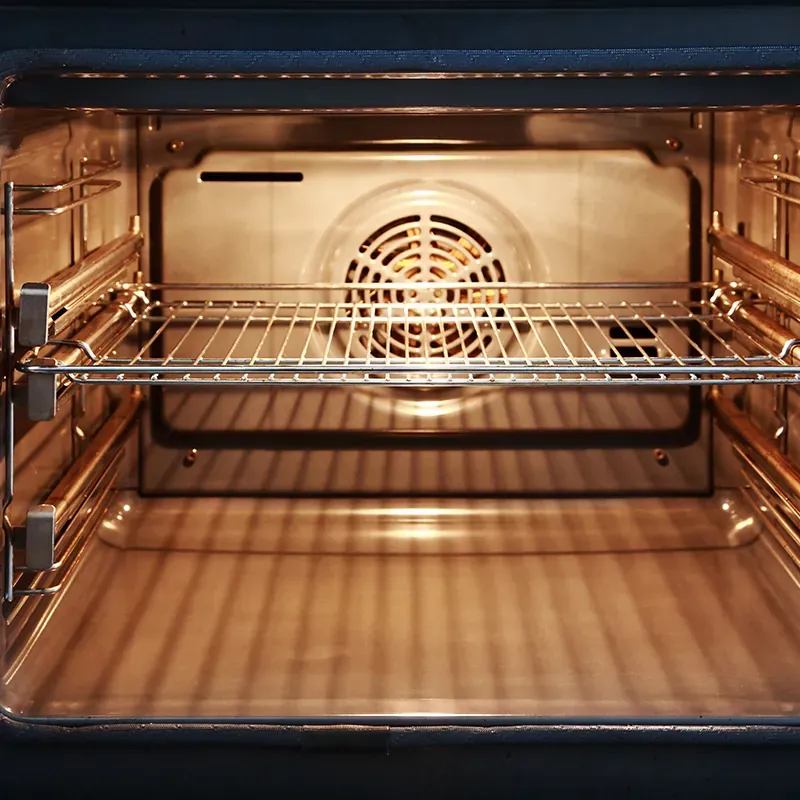
An electric oven heats with metal elements that glow when current runs through them. The bake element sits at the bottom of the oven, and the broil element is at the top. A control board or thermostat switches them on and off to hold the temperature you selected.
Burned-Out Bake or Broil Heating Element
An element turns electricity into heat through resistance. Over time, the coil inside can break, and the element stops heating. You may notice only the top or only the bottom of your food cooking.
With the oven off and cool, look for cracks, blisters or a burned spot. An element can also fail inside while looking normal, so a visual check cannot confirm it. A technician confirms it with a resistance test after disconnecting power.
Tripped Circuit Breaker or Power Supply Problems
In the United States, most electric ranges run on a 240-volt circuit. That supply arrives on two separate 120-volt legs. If one leg is lost, the clock, lights and controls may keep working on 120 volts while the elements, which need the full 240 volts, stay cold.
It is safe to open your electrical panel door and look for a breaker that is tripped or sitting between on and off. Do not remove the panel cover, touch wiring or test voltage. If resetting it does not help, or it trips again, call a professional.
Faulty Oven Temperature Sensor
Most modern electric ovens use a temperature sensor, a thin metal probe usually mounted on the back wall inside the oven. It reports the oven’s temperature to the control board, which decides when to turn the elements on and off.
If the sensor reads wrong, the oven may run too cool, take a very long time to preheat or swing between too hot and too cold. Some ovens display an error code when the sensor fails. Because these symptoms look a lot like a thermostat or control problem, the sensor should be tested before anything is replaced.
Defective Oven Control Board or Relay
The control board is the oven’s electronic brain. It reads the sensor and uses small switches called relays to send power to each element. If a relay fails, the display can work perfectly while the elements never receive power.
Control boards do fail, but they also cost more than most oven parts. A board should not be assumed bad until the elements, the sensor, the wiring and the power supply have been checked.
Faulty Thermal Fuse or High-Limit Safety Device
Many ovens include a thermal fuse or high-limit switch that cuts power if the oven gets dangerously hot. Once it trips, the oven may stop heating entirely, and some models also lose display power.
A tripped fuse is usually a symptom, not the root cause. Something made the oven overheat, such as a stuck relay or a blocked cooling fan. Replacing the fuse without finding that cause risks the oven overheating again.
Why Is My Gas Oven Not Heating?
A gas oven heats by burning natural gas or propane in a burner under the oven floor. An igniter lights the burner, and a safety valve controls the gas flow. Because of that, gas oven heating problems often show up as ignition problems: long delays, no flame or a burner that lights and then goes out.
Safety first: If you smell gas, do not troubleshoot. Leave the building right away. Do not turn on or off any lights or switches, use a phone inside, or light a flame. Once you are outside at a safe distance, call your gas utility or 911.
Weak or Failed Gas Oven Igniter
Most modern gas ovens use a hot surface igniter, a small part that glows bright orange when it heats up. It has two jobs: to get hot enough to light the gas, and to let enough electrical current pass through the circuit to open the safety valve.
As an igniter ages, it can still glow but draw less current than the valve needs. The oven then takes longer and longer to light, or the igniter glows for minutes while the oven stays cold.
Gas Supply Problems
If the cooktop burners do not light either, the problem may be the gas supply to the whole range. That can include a closed shut-off valve, a supply problem from the utility or an empty propane tank.
If the burners light but the oven does not, the supply to the house is probably fine, and the cause is more likely inside the oven. Do not disconnect gas lines, loosen fittings or adjust internal gas components. Those jobs belong to a licensed technician or your gas utility.
Faulty Gas Safety Valve
The safety valve, also called the oven gas valve, opens only when the igniter proves it is hot enough. It is designed to prevent unburned gas from building up in the oven.
A valve that will not open leaves the oven cold even with a strong igniter. Diagnosing it means measuring current in the ignition circuit, and replacing it means working on a gas connection. Both require a trained appliance repair technician.
Oven Temperature Sensor or Control Problems
Many gas ovens also have an electronic control board and a temperature sensor, just like electric models. If the sensor sends the wrong reading, the oven can cycle the burner off too early, run cooler than the setting or show an error code. A failing control can stop the ignition sequence from starting at all.
Blocked Burner Ports or Ignition Problems
Debris, grease or rust can partly block the burner ports, causing a weak, uneven or yellow flame. Damaged igniter wiring can also interrupt ignition. These parts sit near gas connections under the oven floor, so leave disassembly and cleaning to a technician.
Oven Not Heating but Stove Works: What Does It Mean?
This is one of the most common questions homeowners ask, and the answer depends on the type of range.
On a gas range, cooktop burners use simple spark igniters and manual valves. The oven uses its own igniter, safety valve and often a control board. Working burners mostly tell you that gas is reaching the range, but they do not prove anything about the oven’s ignition system.
On an electric range, each surface element has its own switch, and the oven elements are controlled separately by the thermostat or control board. Working burners show the range is getting at least some power. They do not confirm that the oven elements, sensor, relays or full 240-volt supply are working.
So this symptom narrows the search to the oven’s own heating system, but it does not point to one specific part.
How to Troubleshoot an Oven That Won’t Heat
These steps are safe for homeowners and can rule out simple causes before you book a repair.
- Confirm the cooking mode and temperature. Make sure the oven is set to Bake or Convection Bake, not Warm, Proof or Broil, and that the temperature was actually entered. Some controls need you to press Start.
- Look for an error code. Write it down exactly, including letters and numbers. Your owner’s manual will explain what it means for your model.
- Check what else is affected. Note whether the cooktop, clock and light work. This helps separate a power problem from an oven-only problem.
- Check the circuit breaker. If it is safe to do so, open the panel door and look for a tripped breaker. Reset it once. If it trips again, stop and call for help.
- Review lockout and delay settings. Control lock, Sabbath mode or a delayed start can stop the oven from heating. The manual explains how to clear them.
- Watch and listen without opening panels. Notice whether the preheat count starts, whether you hear the gas igniter click or whoosh, or whether you hear repeated clicking with no flame.
- Stop if the problem continues. At this point, the remaining causes involve wiring, gas or safety parts that need proper testing.
Never touch exposed electrical parts, test live voltage, bypass safety switches, disconnect gas lines, replace gas valves, take apart ignition parts or run an oven that shows burned or melted wiring.
Why Is My Oven Not Heating to the Correct Temperature?
An oven that never heats and one that heats inconsistently usually have different causes. If your oven gets hot but bakes too slowly, burns food or takes forever to preheat, look at these possibilities:
- Temperature sensor problems that make the oven think it is hotter or cooler than it really is.
- Calibration drift. Many ovens let you adjust the temperature offset in the settings. Check the manual first.
- Worn door gaskets that let heat escape around the door.
- A weak element or igniter that heats, but more slowly than it should.
- Preheating time. The beep sometimes sounds before the walls and racks are fully heated.
- Opening the door often, which lets heat out every time.
A separate oven thermometer placed in the center of the oven can show you how the oven behaves over time. Keep in mind that every oven cycles above and below the set temperature as it switches the heat on and off. One reading that is 20 degrees off does not prove a part has failed. Look at the pattern over 20 to 30 minutes instead.
Gas vs. Electric Oven Heating Problems: Quick Comparison
| Problem or Symptom | Electric Oven | Gas Oven | Recommended Action |
|---|---|---|---|
| Display works but no heat | Element, relay, thermal fuse or lost 240-volt leg | Weak igniter, safety valve or control issue | Check settings and breaker, then call a technician |
| Stove works but oven stays cold | Oven element, sensor or control fault | Oven igniter or safety valve | Note any error code and book a diagnosis |
| Slow preheating | Weak bake element or sensor | Weak igniter or sensor | Use an oven thermometer to track it, then call |
| Incorrect temperature | Sensor or calibration | Sensor, calibration or weak flame | Check the calibration setting in the manual |
| Stops heating midway | Relay, thermal fuse or sensor | Igniter, control or overheating safety | Stop using it and have it tested |
| Unusual smell or visible damage | Burning smell, sparks or melted wires | Gas smell or yellow, sooty flame | Turn it off. If you smell gas, leave and call the utility |
When Should You Call an Appliance Repair Technician?
Basic checks cannot solve every heating problem. It is time to call a technician when:
- The oven fails to heat again after you have checked the settings and breaker.
- The heating element is cracked, blistered or has burned through.
- A gas oven lights slowly, will not light, or the flame goes out.
- An error code keeps coming back.
- The oven trips the breaker more than once.
- The oven overheats or shuts itself off during cooking.
- You suspect a wiring, relay or control board problem.
A qualified technician can test elements, igniters, sensors and valves with the right meters and follow the procedures for your model, instead of guessing at parts.
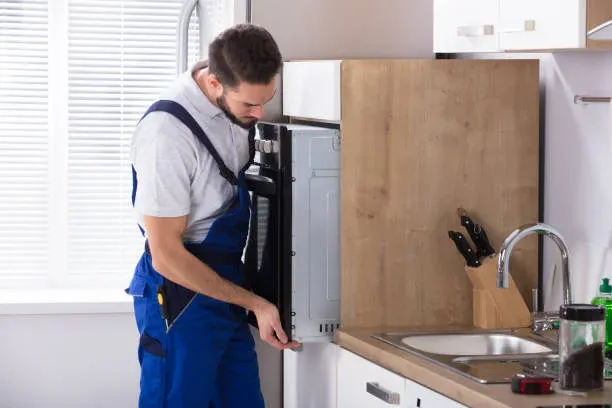
When you call, have the brand, the model number from the label inside the door frame or drawer, and your symptom notes ready. Our oven repair service covers gas and electric ovens across South Lake County, and we also handle stove and range repair when the cooktop is involved.
How to Prevent Common Oven Heating Problems
Regular care will not stop every part from wearing out, but it can reduce strain on the heating system and help you spot problems early:
- Wipe up spills once the oven has cooled, before they bake on.
- Keep heavy buildup away from the bake element and the oven floor.
- Look over the door gasket from time to time for tears or flat spots.
- Follow the cleaning directions in your owner’s manual, including which cleaners to avoid.
- Use the self-clean cycle sparingly if your manufacturer advises it, since the high heat stresses fuses and controls.
- Pay attention to changes like slower preheating, uneven baking or new smells.
- Look up repeated error codes instead of resetting them again and again.
- Schedule service when a symptom points to a failing part.
The Bottom Line
Electric ovens usually stop heating because of an element, a power supply problem, a sensor or a control fault. Gas ovens most often have trouble lighting, whether from a weak igniter, the safety valve or the gas supply. Some causes are simple, like a wrong setting, an active control lock or a tripped breaker. Others need testing with proper tools.
Whatever type of oven you have, avoid repairs that involve gas connections, live electrical parts or safety devices. Those risks are not worth a faster dinner.
If your oven still isn’t heating after basic troubleshooting, a qualified appliance repair technician can inspect the heating system, find the problem and recommend the right repair. You can contact our team to book a visit.