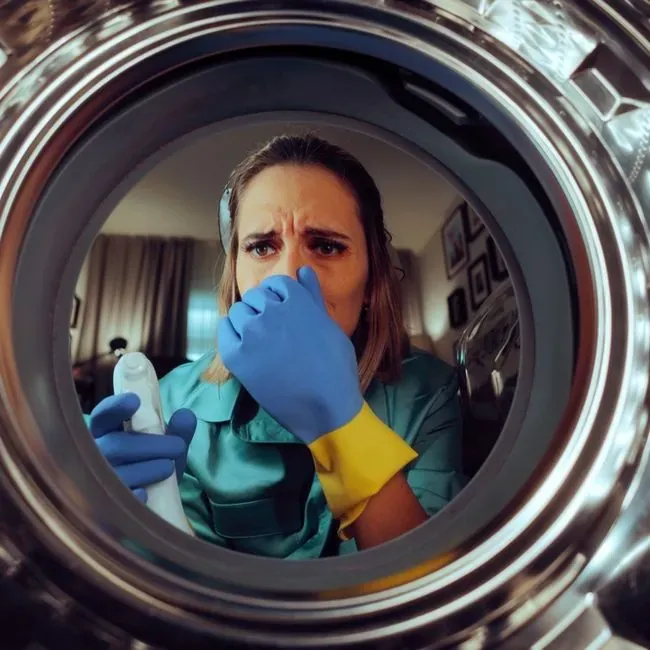
You open the washer to move a load to the dryer and get hit with a musty, sour or even sewer-like smell. The clothes are clean, so why your washing machine smells is a fair question.
Quick answer: A washing machine often smells bad because moisture, detergent residue and debris collect in areas such as the door gasket, detergent dispenser, drum or drainage system. Persistent sewage-like or burning odors may indicate a problem that needs professional attention.
Front-load and top-load washers develop different odor problems, and the type of smell is a clue. Below, you will find the common causes, what each smell can mean, how to clean safely, how to prevent odors and when to call for repair.
Why Does My Washing Machine Smell Bad?
A washer is warm, damp and dark between loads, which is the perfect setting for bacteria and mildew. Odors build when water and residue stay behind: detergent that never fully rinses away, lint, body oils and small debris in the gasket, dispenser and tub. Cold washes and extra detergent let that film build faster, since there is less heat and rinse water to carry it off.
Tell a laundry smell apart from an appliance smell. If one load smells sour because it sat too long, that is the clothes. If the washing machine smells bad even when empty, or every load has the same odor, the source is inside the machine or its drain.
7 Common Causes of Washing Machine Odors
1. Mold and Mildew Around the Door Gasket
The thick rubber door gasket on a front-load washer holds water, lint and hair in its folds after every cycle. Over time, that can lead to dark spots and a musty smell. Not every dark mark is mold, though. It may be detergent residue or dirt.
2. Detergent and Fabric Softener Buildup
More detergent does not mean cleaner clothes. Extra soap and softener leave a sticky film in the dispenser, drum and hoses that traps lint and moisture.
High-efficiency (HE) washers use much less water, so they need HE detergent in the amount listed on the label.
3. Dirty Washing Machine Drum
The drum, and the outer tub behind it, collect detergent film, body oils and dirt. You cannot see most of the outer tub, but water passes over it every cycle. That is why a washer can smell even when the drum looks clean.
4. Clogged Drain Pump Filter
Many washers have a drain pump filter that catches lint, hair, coins and small items before they reach the pump. When it clogs, dirty water sits in it between loads and starts to smell. Not every washer has one you can reach, so check your owner’s manual.
5. Standing Water and Drainage Problems
Water left in the washer turns stale quickly. Causes include a clogged filter, a kinked drain hose, a failing drain pump or a hose installed at the wrong height. Repeated drainage problems usually need a professional diagnosis.
6. Leaving Wet Clothes Inside Too Long
Wet laundry left in a closed washer for hours turns sour and musty, and the trapped moisture adds to the smell inside the drum. Moving clothes to the dryer soon after the cycle ends prevents both.
7. Poor Ventilation After Washing
A closed door and drawer keep the washer damp between loads. Leaving them slightly open helps everything dry, but only if small children and pets cannot climb inside.
Why Does My Washing Machine Smell Like Sewage?
When a washing machine smells like sewage, the washer itself is often not the cause. Many times, the smell comes from the drain it empties into.
Household drains have a P-trap, a curved pipe that holds water to block sewer gas. If the trap dries out, or the drain is not vented properly, sewer gas can rise into the laundry room. A drain hose pushed too deep into the standpipe can also siphon the trap dry.
Dirty drain parts inside the washer or odors from nearby plumbing, such as a floor drain, can also be the source. A blocked drain is possible, but not the only explanation. If the smell keeps returning, have a plumber or appliance technician inspect the drain setup.
Why Does My Washing Machine Smell Like Rotten Eggs?
A rotten-egg smell usually comes from sulfur. That can be hydrogen sulfide in your water supply, especially with well water, or bacteria growing in stagnant water or residue inside the washer.
To narrow it down, run hot and cold water at a nearby sink or tub. If that water smells the same, the problem is likely your water supply rather than the washer. If only the washer smells, focus on cleaning and drainage.
Safety warning: Utility companies add a rotten-egg smell to natural gas so that leaks are noticeable. If the smell could be gas, especially near a gas dryer or water heater, leave the building right away. Do not use switches or phones inside, and call your gas utility or 911 from a safe location.
Why Does My Washing Machine Smell Like Burning?
A burning smell is not a cleaning issue. It can point to an overheating drive motor, a slipping belt on models that use one, a wiring or component problem, friction from a failing part or an overloaded washer. The smell alone cannot confirm which.
Stop using the washer right away. If it is safe, unplug it or switch off its circuit breaker without touching any damaged or hot parts. If you see smoke, sparks or flames, leave the area and call 911. Do not restart the washer until a qualified technician has checked it.
How to Remove Bad Smells From a Washing Machine
For ordinary musty or sour odors, this routine often helps. Check your owner’s manual first, since products and steps vary by brand.
Step 1: Empty the Washing Machine
Remove all clothes and items from the drum. A cleaning cycle with laundry inside will not clean the tub properly.
Step 2: Clean the Door Gasket
Pull back the gasket folds and wipe away lint and residue with a soft cloth and a manufacturer-approved cleaner. Avoid scrub brushes or anything sharp that could tear the rubber.
Step 3: Clean the Detergent Dispenser
Residue hides in the detergent and softener compartments. If your drawer removes, rinse it with warm water and wipe out the opening.
Step 4: Check and Clean the Drain Pump Filter
If your manual shows a homeowner-serviceable filter, put towels and a shallow pan underneath first. Water will come out, and it can be hot after a cycle. Clear the debris and reinstall the filter firmly.
Step 5: Run the Washer’s Cleaning Cycle
Use the tub-clean or self-clean cycle with a washer cleaner your manufacturer approves. Do not assume vinegar, bleach or baking soda is right for your model.
Never mix cleaning chemicals. Bleach combined with vinegar, ammonia or other acidic products can release toxic gas.
Step 6: Dry and Ventilate the Washer
After the cycle, wipe moisture from the gasket and drum opening. Leave the door and drawer slightly open if your manual and your household safety allow it.
Step 7: Test Whether the Odor Is Gone
Check the empty washer the next day, then run a normal load. If the smell returns quickly, look at drainage and plumbing or schedule an inspection instead of using more chemicals.
Why Does My Front-Load Washing Machine Smell?
Front-loaders seal tightly to save water, so they also hold moisture. Water collects in the gasket folds, and residue builds up around the door seal. Too much detergent, frequent cold cycles and a door kept shut between loads make it worse.
Not every front-load washer develops odors. Wiping the gasket, measuring HE detergent carefully and letting the drum air out usually keep it under control.
Why Does My Top-Load Washing Machine Smell?
Top-loaders have fewer folds to trap water, but they still get smelly. Residue can build up under the agitator, around the wash basket and in the softener dispenser. Standing water from poor drainage and moisture left between cycles add to it.
Follow your owner’s manual for what you can clean safely. Removing the agitator or wash basket is often a technician’s job, since it can take special tools.
Washing Machine Smells Even After Cleaning: What Should You Check?
If the washing machine smells after you clean everything you can reach, the source may be hidden: residue in the outer tub or pump, a restricted drain hose, damaged parts or standing water that never fully drains. It may also be outside the washer, such as a plumbing drain problem, your water supply or a drain hose installed at the wrong height.
Repeating the cleaning cycle will not fix a mechanical or drainage problem. When you cannot find the source safely, let a professional troubleshoot it.
Washing Machine Odor Troubleshooting Chart
Smells are clues, not a diagnosis, but this chart shows what to check first.
| Smell Type | Possible Cause | What Homeowners Can Check | When to Call a Professional |
|---|---|---|---|
| Musty | Trapped moisture, dirty gasket | Wipe the gasket and let the drum dry | If it returns within days of cleaning |
| Mildew | Residue in gasket, drawer or tub | Clean the dispenser and run tub-clean | If dark buildup comes back quickly |
| Sewage | Dry P-trap, vent or drain hose setup | Look at how the drain hose is installed | If the smell persists, call a plumber or technician |
| Rotten eggs | Sulfur in water or bacteria | Compare water from another faucet | Right away, from outside, if you suspect gas |
| Burning | Motor, belt, wiring or overload | Stop using it and unplug it if safe | Always, before using it again |
| Sour | Wet clothes left too long, stale water | Move loads promptly and check drainage | If water stays in the drum |
| Odor after cleaning | Hidden residue, drain or pump issue | Check the drain filter if your model has one | If cleaning did not help |
How to Prevent Your Washing Machine From Smelling Bad
Good habits handle most routine odors:
- Move wet clothes to the dryer soon after the cycle ends.
- Let the drum and drawer air out after washing, when it is safe to do so.
- Use HE detergent if your washer requires it, measured by the label.
- Clean the detergent dispenser regularly.
- Wipe the gasket and other surfaces you can reach.
- Run the tub-clean cycle as your manufacturer recommends.
- Avoid overloading, which can leave clothes poorly rinsed.
- Check the drain filter as your manual instructs, if your washer has one.
- Deal with slow draining or standing water promptly.
How often to clean depends on how much you wash, your model, your water and the manufacturer’s guidance.
When Should You Call a Washing Machine Repair Technician?
Call a technician if the smell lasts after proper cleaning, water stays in the drum, drainage error codes keep appearing, or you hear grinding or humming while it drains. Leaks, burning smells, a cleaning cycle that will not finish and a suspected drain pump problem also need professional attention.
Some problems belong to a plumber, such as a dry trap or a house drain venting issue. An appliance technician focuses on the washer itself, including the pump, hoses and controls.
If the problem is inside the machine, our washer repair service can test the drain system and components to find the cause.
Final Thoughts
Most washer odors come down to moisture, detergent buildup, a dirty gasket or a drain that is not doing its job. Regular cleaning, the right amount of detergent and letting the washer dry between loads take care of many everyday smells.
Sewage odors, repeated drainage problems and burning smells point to plumbing, mechanical or electrical issues that cleaning will not fix.
If your washing machine still smells bad after proper cleaning, a qualified appliance repair technician can inspect the drainage system, pump and other components to identify the underlying issue. You can contact our team to schedule a visit.